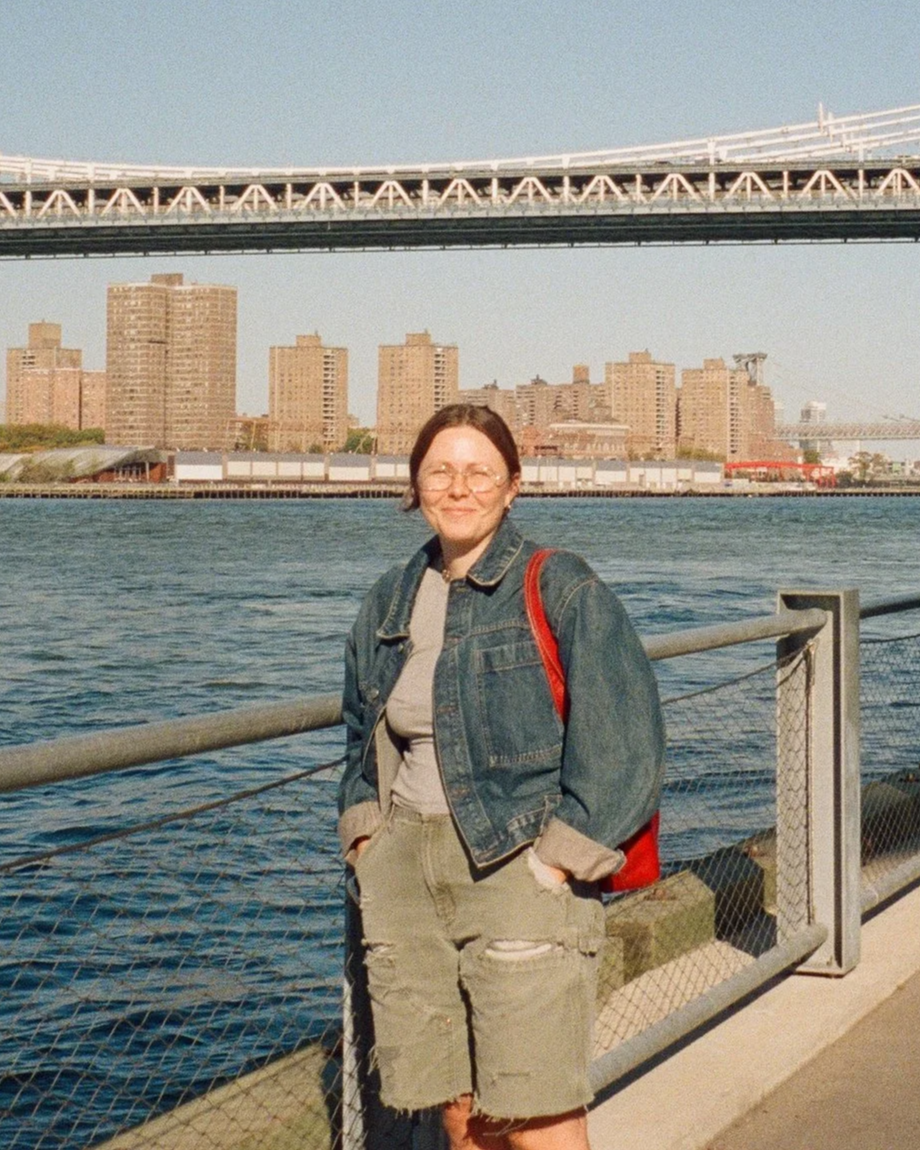
values + identity
I'm Sarah. I'm a lesbian and genderqueer person based in Los Angeles, California. As your therapist, I am myself. I lean very curious, sometimes funny (jury's still out), open-hearted, gentle, available, and expressive. I trust and honor you as the expert of your lived experience.
To me, therapy is political. I move through the world with the unearned privilege of being cis-presenting and white, and I live in conscious refusal of patriarchy as a queer and lesbian-identified person. It is at this intersection that I choose to orient my life and practice toward unsettling the colonial and patriarchal systems that uphold my privilege. The process of decolonizing myself, my work, and the field of psychotherapy is central to my practice and ethics and is always growing, evolving, and teaching me. I am inspired by the work of adrienne marie brown, Audre Lorde, and Leslie Feinberg.
Some of the core themes I’ve grappled with in my own life include: religious trauma and deconstruction, sexuality, gender dysphoria, grief, loneliness, depression, anxiety, body dysmorphia, codependency and attachment wounds, shame, and a pervasive sense of not being enough. When I’m not in the therapist’s seat, I love to surf, read, play guitar, cook, collect records, be in community, and watch as many Bravo reality tv shows as humanly possible.

i work from a gestalt and existential lens
what is gestalt therapy?
Gestalt therapy is rooted in building awareness of yourself in the present moment. Rather than only talking about your story, we also pay attention to what’s happening right here, right now - your sensations, emotions & impulses as they emerge in the room. Through deepening awareness, we begin to notice the ways you may have learned to disconnect from yourself, stay small, over adapt, or move through the world as shaped by past experiences.
This approach integrates an exploration of parts of the self. Together, we notice and engage with the many different parts of you - the parts that learned to protect you, to carry pain or shame, and the parts that may have been pushed aside to survive. Rather than trying to “fix” these parts, we work toward understanding them with curiosity and compassion.
At its core, Gestalt therapy is deeply connected to agency, authenticity, and choice. As awareness grows, you may begin to feel more connected to yourself and more able to respond to life with intention. I also recognize that many of our ways of coping are shaped not only by personal experiences, but by larger social and cultural systems. Healing can become a process of reclaiming your voice, your needs, and the freedom to live in ways that feel more aligned and true for you.
what about existential therapy?
This is a way of working that centers your lived experience, how you really feel yourself in the world, moment to moment. Rather than starting with fixing what’s “wrong,” I work from a phenomenological lens: we pay attention to your subjective, raw experience as it shows up, in your body, in your relationships, and in the room with me.
Similar to Gestalt, radical agency is central: the understanding that you are not just a product of your circumstances, and that you have the capacity to choose, respond, and shape how you live. Together we explore what it means to be you, what you’re avoiding, and what it would take to meet your life more fully.
My role is to stay expressive and available to whatever energy you bring into the room. I’m not a blank screen. I’m a present, engaged human meeting you where you are, just as you are.
we might work well together if:
you're looking for a therapist who's laidback, playful, and genuine. I bring humor, creativity, movement, humanness, and imagery into the room.
I care about consent, collaboration, and disrupting the oppressive hierarchy that therapy can sometimes replicate.